How to pay off credit card debt, for good.
No tricks, no products to buy. The plain sequence that works: know the numbers, stop the bleeding, pick an order, find the extra, lower the rate where you can, and automate the rest. Ten minutes to read, a plan by the end.
1. Know the numbers.
Open every statement and write down three things per card: the balance, the APR, and the minimum payment. Add the balances for your total and the minimums for your floor. Most people have never done this, and most are surprised by the APR column: card rates in the high twenties are common.
Put the list into the debt-free date calculator. It will tell you how long the minimums alone would take, which is the number that makes the rest of this guide worth doing.
2. Stop the bleeding.
- No new charges on the cards you are paying down. Use a debit card or cash for spending while the plan runs.
- Autopay the minimums on every card so a missed date never costs a late fee or a penalty rate.
- Keep a small buffer, even a few hundred dollars, so the next surprise bill does not land on a card.
3. Pick an order.
Every method does the same thing: minimums on all cards, all extra money on one focus card, and when it is paid off, its whole payment rolls to the next. The only decision is which card goes first.
- Avalanche, highest APR first, costs the least. Use the avalanche calculator.
- Snowball, smallest balance first, clears a card soonest and keeps you going. Use the snowball calculator.
- Not sure? The comparison shows the difference in dollars and months for your own cards. When it is small, take the snowball's early win.
4. Find the extra.
The plan is only as fast as the money you add above the minimums. Even $50 a month changes the date by more than it looks, because it goes straight to principal and rolls forward after each payoff. Places it usually hides:
- Subscriptions you forgot, and the two or three you use least.
- One fixed line in the budget, food or transport, trimmed by a set amount rather than "less".
- A side income, a raise, or a tax refund, committed to the focus card before it hits your account.
- Selling one thing you no longer use. One-off money is still money on the focus card.
5. Lower the rate.
- Ask. Call each issuer, mention your payment history, and ask for a lower APR. A no costs nothing; a yes reorders your list.
- Balance transfer. A 0% promotional card can pause interest for a period, usually for a transfer fee of a few percent. It works only if you pay down the balance during the promotion and leave the old card empty.
- Consolidation loan. A fixed-rate personal loan at a lower rate than your cards turns several payments into one. The risk is the same: the cards must stay at zero afterwards.
- Nonprofit credit counselling. If minimums are more than you can pay, a debt management plan can negotiate rates with issuers. It is a real option and often better than settlement.
6. Automate and track.
Set the focus card's payment to go out the day after payday, before the money can be spent. Then track the plan somewhere you will see it: the printable worksheet on the fridge, the spreadsheet in your files, or the Debtless app on your phone, which recalculates the date from every payment you log.
Check in once a month. Update balances, tick the list, and when a card hits zero, celebrate and move its payment to the next one. That rollover is the whole engine.
7. Keep the cards at zero.
When the last balance clears, keep the oldest no-fee cards open for your credit history and use one for small recurring charges you pay in full every month. The habit that got you here, paying the statement balance in full, is the one that keeps you here.
Keep going.
Smallest balance first. See your payoff order and debt-free date.
Highest interest rate first. The order that costs the least.
An honest comparison of the apps people use to get out of debt.
How long minimums really take, and what a fixed payment does instead.
The same plan, kept for you.
Debtless does this math from the payments you log and moves the date every month. Free on iPhone.

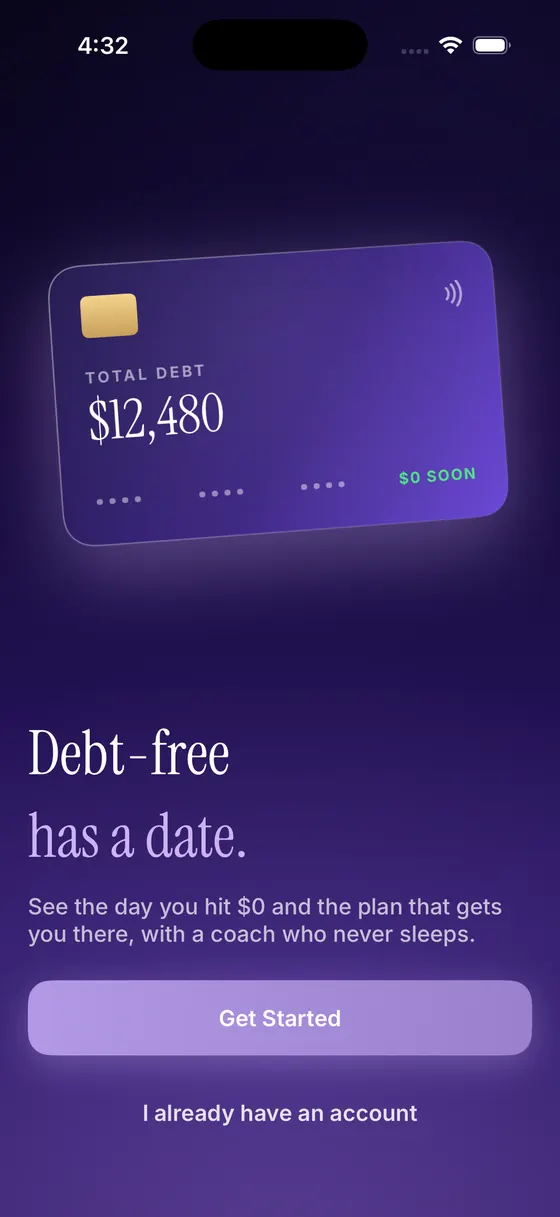
One card, one number, one day you hit zero.
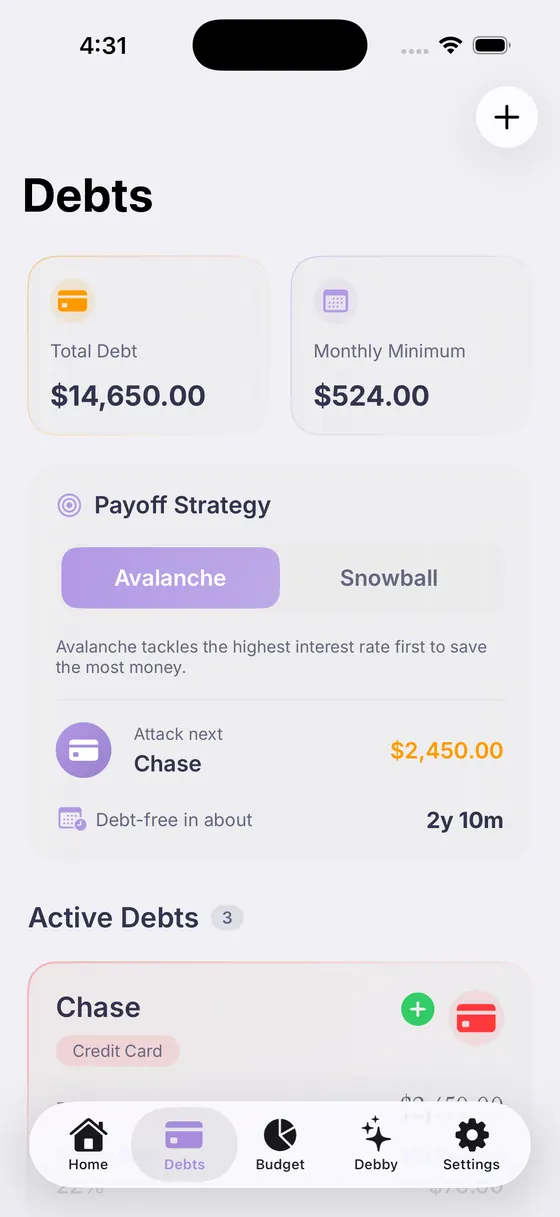
Pick the order, see the date move, switch any time.
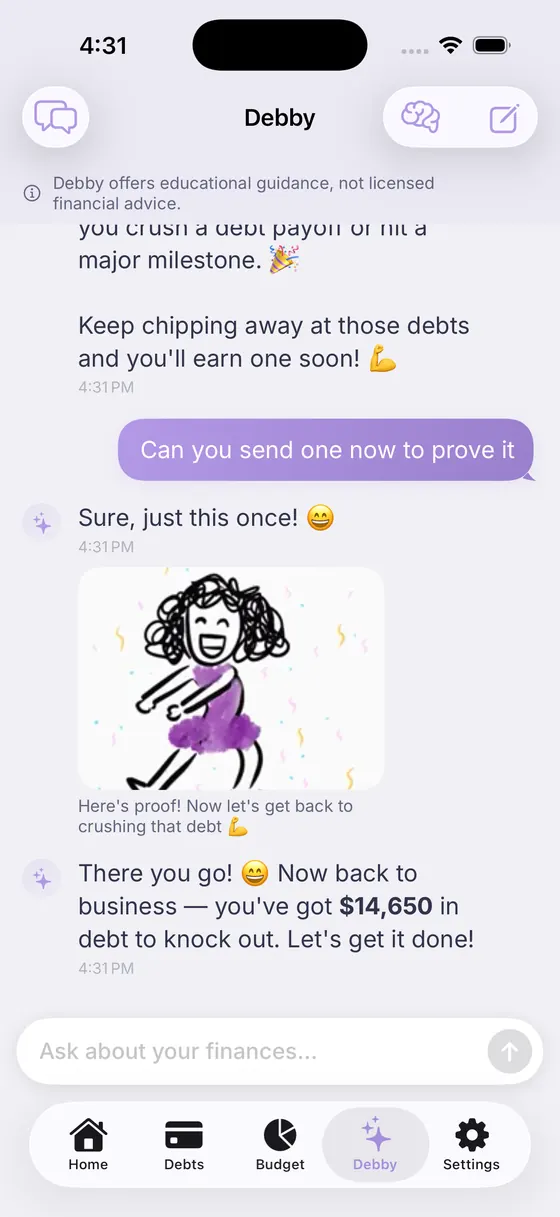
Answers with your real balances, rates and budget.
Questions, answered.

Your debt‑free date is closer than you think.
Add your debts, pick a strategy, and watch the date move.
Free on the App Store